
by Faiz Riziq | Jan 22, 2025 | Luar Negara, English & Other Country
Bagi memastikan perjalanan di plaza tol lebih lancar dan bebas kesesakan, Touch ‘n Go eWallet kini memperkenalkan ciri baharu yang dinamakan SOS Balance. Dengan ciri ini, pengguna boleh melintasi tol walaupun baki kad TNG mereka tidak mencukupi. Menarik, bukan? Berikut adalah segala yang anda perlu tahu mengenai SOS Balance TNG:
Apa Itu Ciri SOS Balance?
Ciri SOS Balance adalah kemudahan yang disediakan melalui aplikasi TNG eWallet, membolehkan pengguna melunaskan pembayaran tol apabila baki dalam kad TNG tidak mencukupi.
Namun begitu, ciri ini hanya terhad kepada pembayaran tol sahaja buat masa ini. Setelah menggunakan ciri SOS Balance, pengguna diberikan tempoh 24 jam untuk menambah nilai TNG eWallet mereka. Baki SOS yang tertunggak akan ditolak secara automatik selepas penambahan nilai dilakukan.
Hanya Pengguna Setia TNG eWallet Layak
Ciri ini tidak ditawarkan kepada semua pengguna secara automatik. Ia hanya tersedia untuk pengguna setia TNG eWallet yang memenuhi kriteria tertentu. Untuk meningkatkan peluang mendapat akses ciri ini, pengguna disarankan:
- Melangsaikan semua bayaran tertunggak yang dibuat melalui TNG eWallet.
- Kerap menambah nilai dan aktif menggunakan TNG eWallet untuk transaksi harian.
Bagi pengguna yang layak, ciri SOS Balance akan diaktifkan secara automatik. Sekiranya anda belum layak, tingkatkan tabiat penggunaan TNG eWallet anda untuk memenuhi kriteria yang ditetapkan.
PayDirect Perlu Diaktifkan untuk Menggunakan Ciri Ini
Walaupun layak, beberapa faktor mungkin menyebabkan ciri SOS Balance tidak dapat digunakan. Antaranya:
- Ciri ini hanya tersedia di plaza tol terpilih yang menyokong RFID dan PayDirect.
- Pengguna perlu memastikan RFID atau PayDirect diaktifkan dalam aplikasi TNG eWallet mereka.
- Jika baki eWallet anda mencukupi, ciri SOS Balance tidak akan diaktifkan kerana pembayaran akan ditolak secara normal.
Untuk mengelakkan sebarang masalah, pengguna dinasihatkan untuk memeriksa status PayDirect di aplikasi mereka, kerana terdapat kemungkinan ciri ini telah dinyahaktifkan tanpa disedari.
Lokasi Tol yang Menyokong Ciri SOS Balance
Buat masa ini, ciri SOS Balance hanya tersedia di plaza tol terpilih yang menyokong TNG RFID dan PayDirect. Untuk meningkatkan akses kepada ciri ini, pihak pengendali lebuh raya digalakkan memperluaskan liputan RFID dan PayDirect pada lebih banyak plaza tol di seluruh negara.
Melancarkan Perjalanan Pemandu Malaysia
Dengan inisiatif ini, Touch ‘n Go eWallet terus berinovasi untuk meningkatkan kemudahan pembayaran tol bagi pemandu di Malaysia. Ciri SOS Balance bukan sahaja memberikan ketenangan kepada pengguna ketika melalui tol, malah membantu mengurangkan kesesakan dan memudahkan perjalanan anda. Muat turun atau kemas kini aplikasi Touch ‘n Go eWallet anda sekarang dan nikmati kemudahan ini sempena perjalanan anda! 🚗💨


by Faiz Riziq | Jan 20, 2025 | Ekonomi, Perniagaan & Korporat, Luar Negara, English & Other Country
Malaysia is poised to generate potential investments of RM11 billion and potential exports of RM500 million, following the successful official visit by Prime Minister Datuk Seri Anwar Ibrahim to the United Kingdom (UK).
Here’s a breakdown of the key sectors involved:
- Renewable Energy: Investments to support Malaysia’s transition to green energy.
- Digital Economy: Enhancing Malaysia’s technological advancements.
- Automotive: Expanding innovation in vehicle manufacturing.
- Banking & Real Estate: Strengthening financial and property markets.
- Petrochemicals: Boosting industrial growth.
On the export front, the focus areas include:
- Equipment and Aircraft Components
- Furniture
- Food and Beverages
Did You Know?
In 2024 (up till November):
- Total Malaysia-UK trade reached RM15.3 billion.
- Malaysia exported RM7.83 billion worth of goods to the UK.
- Imports from the UK amounted to RM7.47 billion.
A Look Back: Investment Success Stories
As of September 2024:
- 486 manufacturing projects by UK companies have been implemented.
- Total investments amounted to RM12.49 billion.
- These projects created 41,630 job opportunities for Malaysians.
Why Is This Important?
The UK is Malaysia’s fourth-largest trading partner in Europe, showcasing the strength of our bilateral ties. By capitalizing on these opportunities, Malaysia continues to reinforce its position as a key player on the global economic stage.

by Faiz Riziq | Jan 13, 2025 | Ekonomi, Perniagaan & Korporat, Luar Negara, English & Other Country
Since its establishment in 1974, PETRONAS, through its key division Malaysia Petroleum Management (MPM), has been a driving force in shaping Malaysia’s upstream oil and gas (O&G) sector. With innovative strategies and a commitment to sustainability, MPM has solidified Malaysia’s position as a competitive energy hub in the region.
Over the past 50 years, this sector has attracted cumulative investments of RM700 billion, making it a cornerstone of the nation’s economy. According to Datuk Ir. Bacho Pilong, MPM Senior Vice-President, 2025 is set to be a record-breaking year, with investments exceeding RM60 billion and a production target of two million barrels of oil equivalent per day.
MPM’s Strategy: Innovation Meets Sustainability
MPM employs a “clustered exploration” approach to maximize resources in mature geological areas. Using advanced technologies like seismic surveys and in-depth data analysis, this strategy has unlocked new potential in previously explored regions.
In addition to innovation, MPM prioritizes environmental responsibility. “How can we monetize these resources responsibly while reducing carbon emissions? The world needs more energy, but with fewer emissions,” Bacho emphasizes, highlighting PETRONAS’ commitment to its net-zero carbon aspirations.
Malaysia Bid Round (MBR): Attracting Global Investors
Revitalized in 2021, the Malaysia Bid Round (MBR) has successfully drawn interest from international players such as SK Earthon and Inpex Corp, alongside local companies like Dialog and Petra Energy. MBR offers competitive fiscal terms, such as Enhanced Profitability Terms (EPT), ensuring attractive returns for investors.
In 2024, PETRONAS launched MBR+, a year-round platform providing additional investment opportunities outside the annual bid cycle. Leveraging the PETRONAS myPROdata platform, investors gain access to comprehensive insights, streamlining evaluations and enabling informed decision-making.
A Promising Future for Upstream Oil & Gas
MPM is focused on exploring five untapped basins, including Langkasuka and Semporna, with a hydrocarbon potential of up to 4.2 billion barrels of oil equivalent. With technologies like artificial intelligence, PETRONAS aims to enhance the success rate of new hydrocarbon discoveries.
Strengthening the OGSE Ecosystem
With over 3,000 active service providers in the upstream sector, PETRONAS is dedicated to increasing local participation, particularly in Sabah. “We aim to shape the industry to benefit the entire value chain,” says Bacho.
Looking Ahead to 2025
The Malaysia Bid Round 2025, set to launch in the first quarter of the year, offers exciting opportunities for investors to explore Malaysia’s upstream O&G sector, including promising areas in Sabah. For more information on investment opportunities and MBR 2025, visit the official PETRONAS MPM website at www.petronas.com/mpm.
🔗 #PETRONAS #MalaysiaOG #EnergyInvestment #MPM2025
by Faiz Riziq | Jan 10, 2025 | Fakta & Informasi, Luar Negara, English & Other Country
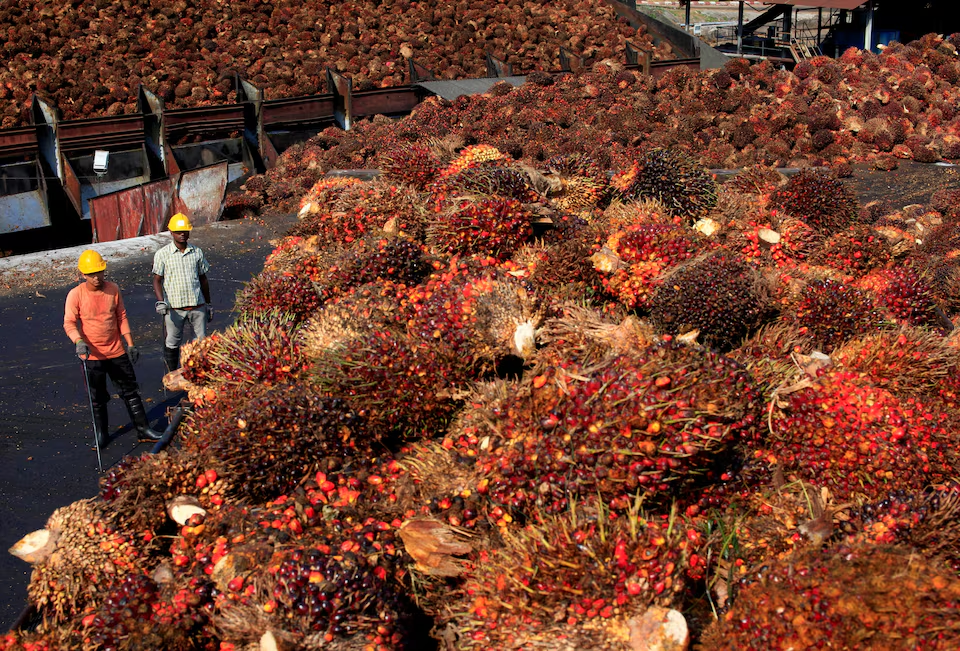
Malaysia’s palm oil industry witnessed a notable decline in December, marking the third consecutive month of reduced stock levels. According to the Malaysian Palm Oil Board (MPOB), palm oil stocks dropped by 6.91%, settling at 1.71 million metric tons by the end of the month.
Key Highlights from December Data
- Production Slowdown
Crude palm oil production fell by 8.3%, recording 1.49 million tons in December compared to November. This decline indicates a seasonal production dip, coupled with possible labor and weather challenges.
- Slump in Exports
Exports plunged by 9.97%, amounting to 1.34 million tons. The global market dynamics, including competition from other vegetable oils and economic conditions in importing countries, likely contributed to this drop.
- Missed Forecasts
A Reuters survey had projected:
- Inventories at 1.76 million tons (actual: 1.71 million tons).
- Production at 1.48 million tons (close to the actual 1.49 million tons).
- Exports at 1.38 million tons (slightly higher than the actual 1.34 million tons).
Implications for the Industry
The declining stocks reflect seasonal production trends, but the drop in exports raises questions about demand consistency. Key importing countries like India and China play a significant role in shaping Malaysia’s palm oil market. Additionally, competition from alternative vegetable oils like soybean and sunflower oil impacts Malaysia’s export potential.
What Lies Ahead?
As the world’s second-largest producer of palm oil, Malaysia’s performance is closely watched by global markets. Moving into 2025, industry players are likely to focus on:
- Boosting productivity to recover stock levels.
- Strengthening export strategies to maintain competitiveness.
- Addressing sustainability concerns to appeal to environmentally conscious buyers.
This three-month trend highlights the dynamic nature of the palm oil industry, which remains a key pillar of Malaysia’s economy. Stakeholders and investors will be keenly observing how Malaysia navigates the challenges and opportunities in the months ahead.
Stay updated with the latest developments in Malaysia’s palm oil industry!
by Faiz Riziq | Jan 9, 2025 | Ekonomi, Perniagaan & Korporat, Luar Negara, English & Other Country
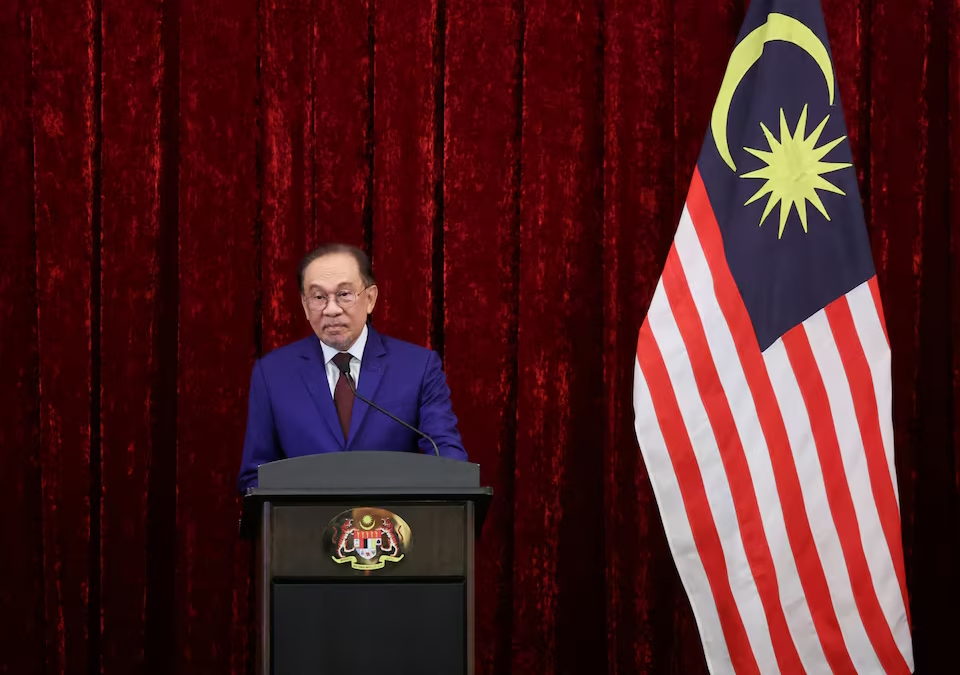
Malaysia is leveraging its strategic location to become a key player in energy and supply chain diversification this year. The country aims to solidify its position as a global leader in the semiconductor industry and Islamic finance, Prime Minister Anwar Ibrahim announced on Thursday during an economic forum.
He highlighted Malaysia’s dramatic economic rebound last year, driven by substantial strategic investments in renewable energy and artificial intelligence infrastructure. These investments have set the stage for sustained economic growth and innovation.
A Regional Hub for Investment in Southeast Asia
Malaysia is rapidly emerging as a preferred destination for foreign investors in Southeast Asia. This resurgence is underpinned by a combination of robust economic growth and a stable currency, which distinguishes Malaysia from its regional peers grappling with political instability and economic uncertainty.
“In 2025, we aim to double down on our geographical centrality as a conduit for electricity, talent, and supply chain diversification,” Anwar said. He noted that inflation and the ringgit remain stable, while the stock market has shown positive performance, reflecting the confidence of investors.
Major Tech Investments Propel Economic Growth
Last year, Malaysia attracted significant investments from major tech companies, including Alphabet’s Google. These investments have propelled Malaysia’s economy to surpass market expectations in the second and third quarters of 2024. The ringgit emerged as one of Asia’s best-performing currencies, further boosting investor confidence.
In a move to cement Malaysia’s role in the global tech landscape, Anwar previously announced a target of at least RM500 billion (approximately USD107 billion) in investments for the semiconductor industry. This ambitious plan underscores Malaysia’s commitment to becoming a global hub for semiconductor manufacturing and innovation.
Driving Towards Global Leadership
With its strategic initiatives and steady economic momentum, Malaysia is well-positioned to enhance its status as a regional powerhouse and global leader in key industries. By focusing on energy, technology, and financial sectors, the nation is charting a path towards sustainable growth and global prominence.
by Faiz Riziq | Jan 9, 2025 | Ekonomi, Perniagaan & Korporat, Luar Negara, English & Other Country
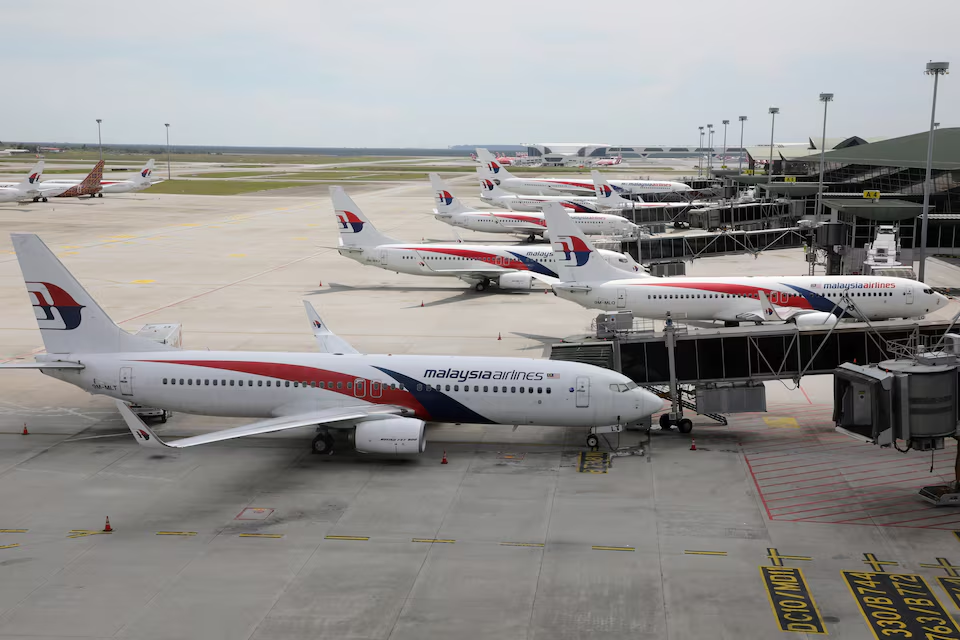
In a significant development for Malaysia’s aviation sector, a consortium led by the sovereign wealth fund Khazanah and BlackRock’s Global Infrastructure Partners has announced that it has secured an 84.1% stake in Malaysia Airports Holdings Berhad (MAHB). This milestone, reached as of Wednesday, brings the consortium closer to the 90% ownership threshold required to delist the company from Bursa Malaysia.
The consortium’s composition includes other prominent investors such as Malaysia’s Employees Provident Fund (EPF) and the Abu Dhabi Investment Authority. Together, they have been working strategically to consolidate control over MAHB, one of the region’s key players in airport operations.
Extended Deadline for Offer Acceptance
In a recent stock exchange filing, the consortium revealed that the offer period for the takeover has been extended to January 17, providing shareholders additional time to consider the proposal. Initially announced in May last year, the consortium’s offer stands at 11 ringgit per share, valuing the airport operator at an equity value of 18.4 billion ringgit (approximately $4.09 billion).
Market Response and Strategic Implications
Over the past year, MAHB’s shares have seen a substantial rise, with a 40.9% increase according to data from LSEG. On Wednesday, the stock closed 1.3% higher at 10.78 ringgit, reflecting investor confidence and the robust appeal of the takeover bid.
This move is poised to reshape Malaysia’s aviation landscape. By consolidating control of MAHB, the consortium aims to enhance operational efficiency, drive infrastructural investment, and strengthen the company’s competitive edge in the global airport management industry. Furthermore, the inclusion of international heavyweights like BlackRock and the Abu Dhabi Investment Authority underscores the strategic importance of Malaysia Airports as a regional hub.
Looking Ahead
As the consortium edges closer to full ownership, the potential delisting of MAHB marks a transformative phase for the company and its stakeholders. The extended offer period until January 17 provides a window for remaining shareholders to participate in this landmark transaction.
With a history of steady growth and increasing market value, Malaysia Airports is set to embark on a new chapter under the stewardship of Khazanah and its partners. The takeover not only highlights the confidence of institutional investors in Malaysia’s infrastructure sector but also sets the stage for future developments in the country’s aviation and transport ecosystem.



Recent Comments